When it comes to teaching, the Socratic Method has been used for centuries to foster dialectical discussions and help students gain an understanding of a concept. It’s a powerful tool that can be used in any classroom setting, from elementary school all the way up to college and university. By asking numerous questions, Socrates would reveal fallacies in assumptions that were thought to be arguments. In this blog post, we’ll examine how you can use the Socratic Method in your classroom to spark meaningful conversations and empower your students.

How Does It Work?
The Socratic Method is based on dialogue between teacher and student using questions; a teacher acts as an encourager who helps guide students through discovery and self-learning. This Method fosters critical thinking skills and creative problem-solving abilities within learners. Unlike traditional lecturing techniques, where teachers provide direct answers, the Socratic Method creates an environment for students to explore their thoughts and opinions through questioning—allowing them to come to their own conclusions about a subject matter.
Benefits of Using The Socratic Method:
One of the main benefits of using this Method is that it encourages active participation from everyone in the room—not just from the teacher. By engaging in meaningful discourse and dialogue with one another, learners become more engaged with what they are learning instead of simply memorizing facts or concepts without understanding why they are important or relevant in modern life. Additionally, teachers will benefit by having better insight into what each individual learner understands versus what they do not—allowing them to tailor their instruction accordingly while helping them create authentic connections with each student in the class.
My Experience:
I use the Socratic Method during my classes, and sometimes students need clarification on this Method. I even had a student review that said, “she never knows the answers to her own questions!” 🤣🤣🤣
One way to encourage participation and have students respect the process is to explain that graduate seminars and law schools often use the Socratic Method.
The following is edited from the University of Chicago Law School:
Our students discover quickly that the Socratic Method is a tool and a good one at that used to engage a large group of students in a discussion, while using probing questions to get at the heart of the subject matter. The Socratic Method is not used at UChicago to intimidate, nor to “break down” new law students, but instead for the very reason Socrates developed it: to develop critical thinking skills in students and enable them to approach the law as intellectuals.
The Role of the Socratic Method in Modern Law Schools
“It should be one of the functions of a teacher to open vistas before his pupils, showing them the possibility of activities that will be as delightful as they are useful.” These words by Bertrand Russell capture what my colleagues and I aspire to do as law professors. Many of us use, at least occasionally, the style of legal pedagogy known as the Socratic Method.
University of Chicago professors who rely on the Socratic Method today use participatory learning and discussions with a few students on whom they call to explore very difficult legal concepts and principles. The effort is a cooperative one in which the teacher and students work to understand an issue more completely. The goal is to learn how to analyze legal problems, to reason by analogy, to think critically about one’s own arguments and those put forth by others, and to understand the effect of the law on those subject to it. Socratic discourse requires participants to articulate, develop and defend positions that may at first be imperfectly defined intuitions. Law professors cannot provide students with certain answers, but we can help develop reasoning skills that lawyers can apply, regardless of the legal question.
We could lecture students about legal reasoning, but those of us who use the Socratic Method prefer to foster as much active learning as possible. Just as a professor who immediately answers her students’ questions loses an opportunity to help them discover the answers on their own, the professor who dispenses legal principles in classroom soliloquies will reduce students’ opportunities to engage in independent critical thinking that can lead them to a deeper understanding.
Making mistakes in class is inevitable and ultimately helpful as we work toward solutions to difficult legal problems. Any professor who uses the Socratic Method has had the experience of getting a “right” answer too early in the class, and then facing the challenge of working backward to clarify for other students the process of reaching a solution. We are teaching reasoning skills, and the process of discovering a right answer is often more important than the answer itself.
Using the Socratic Method in your classroom can be an effective way to encourage meaningful conversations that spark critical thinking skills while creating solid relationships between you and each student in the class. By using questions instead of providing direct answers, you can help guide students toward self-discovery so that they can understand conclusions about course material instead of simply memorizing facts without understanding why they are important or relevant in modern life. Try implementing the Socratic Method today and see how it can transform your classroom!
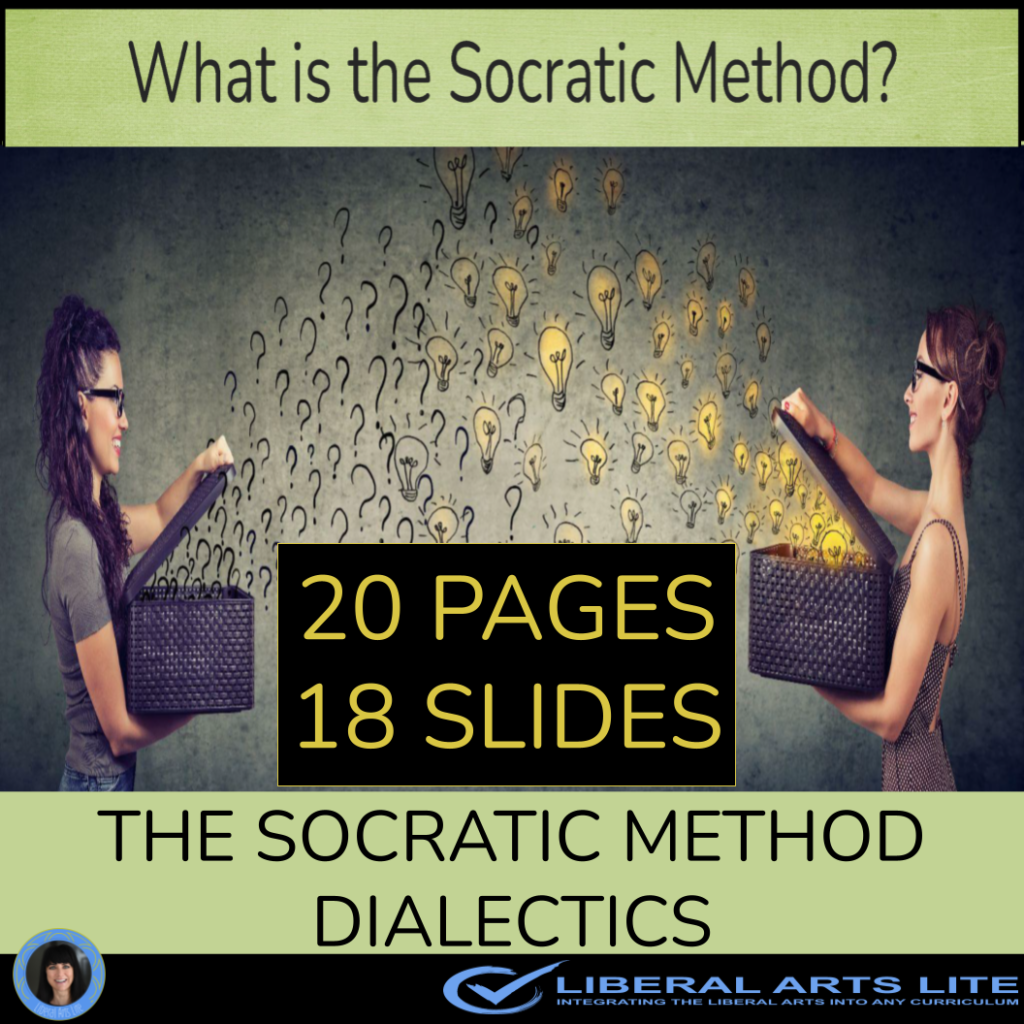
Have a look at my product if you need a refresher or are interested in pursuing dialectics in your classroom!
Do you have feedback on this topic or other posts in this series? Share them in the comments below!
Thanks for stopping by!
Linda Jennifer
